
Regent Hire Jobs Guide: UK Career Trends, Skills Demand & Recruitment Insights

Regent Hire Jobs Guide: UK Career Trends, Skills Demand & Recruitment Insights
  • 18 June, 2026

  • Finance & Accounting Jobs

Regent Hire Jobs Guide: UK Career Trends, Skills Demand & Recruitment Insights

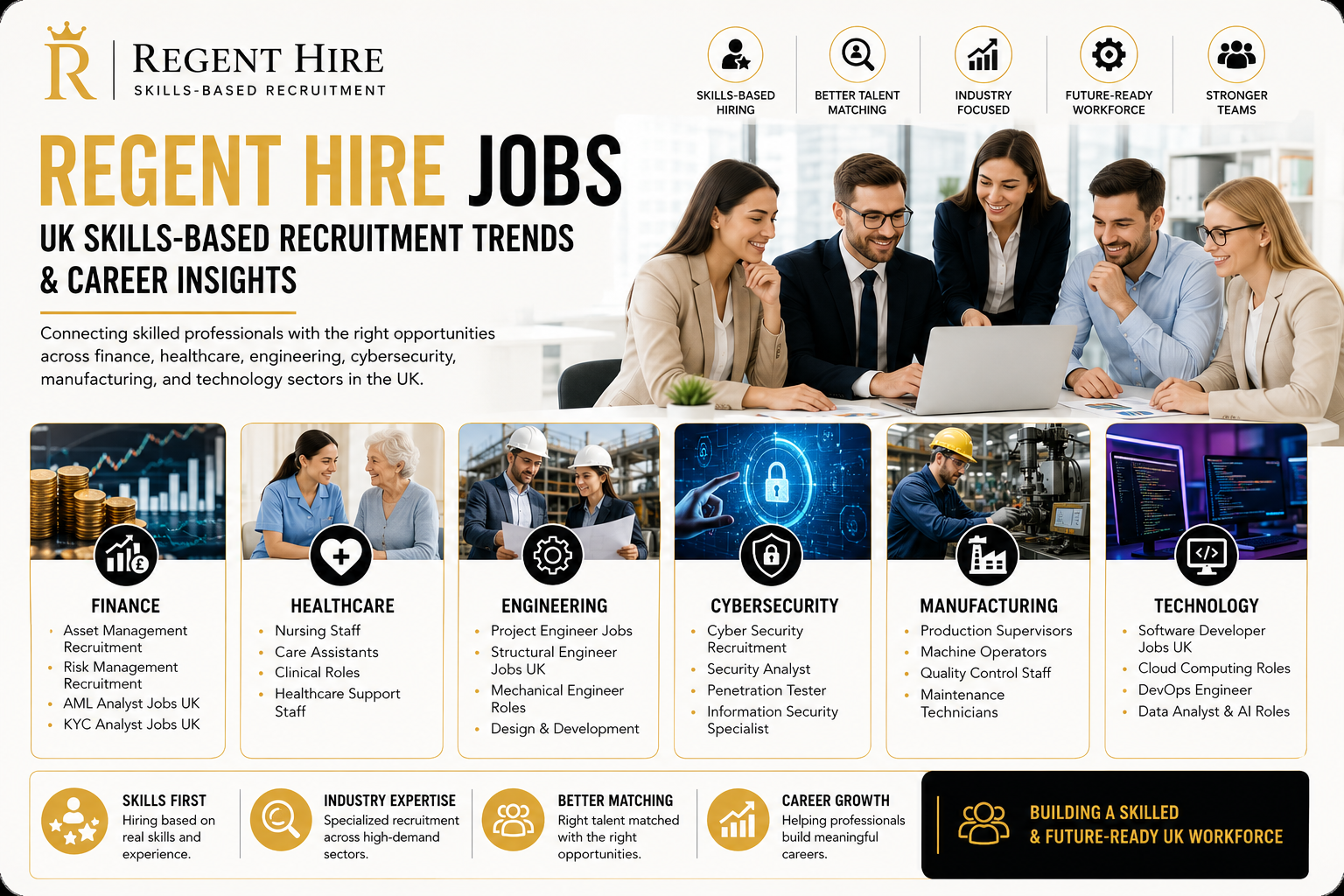
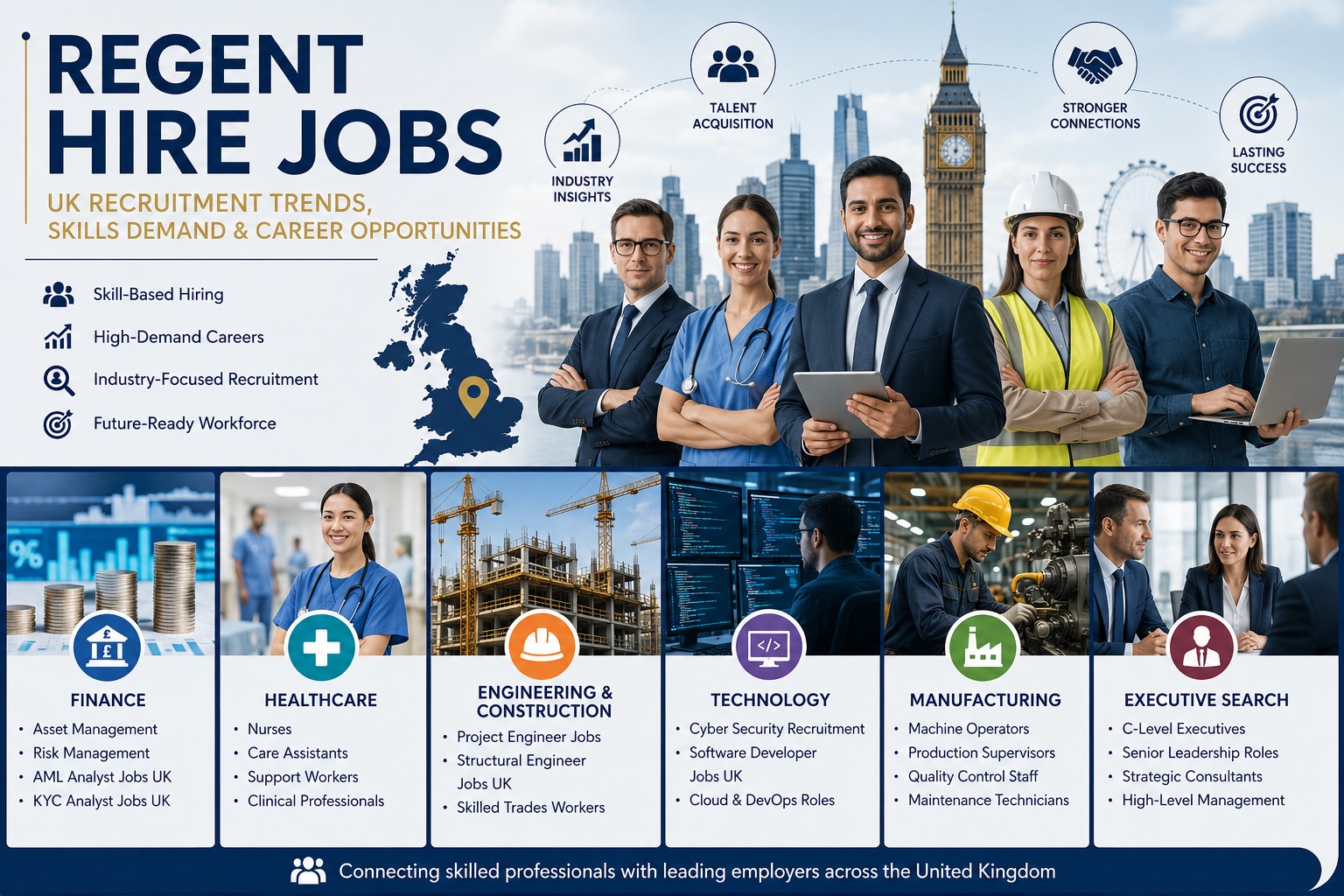
Regent Hire Jobs highlights the latest UK recruitment trends across finance, healthcare, engineering, technology, and manufacturing sectors. Employers are increasingly focusing on skills, experience, and practical expertise when hiring candidates. As industries face talent shortages and evolving workforce demands, specialized recruitment has become more important than ever. From finance and cybersecurity to healthcare and engineering, opportunities continue to grow across the UK job market. This guide explores key hiring trends, in-demand roles, and the future of recruitment in the UK.


FAQs About  Regent Hire Jobs

FAQs

Regent Hire Jobs refers to modern UK hiring trends where employers focus on skills, experience, and job-specific expertise instead of only academic qualifications. It reflects how recruitment is becoming more specialized across industries.

Regent Hire is aligned with skill-based recruitment practices, focusing on matching candidates with roles based on real capabilities rather than general CV screening.

It covers multiple UK sectors including finance, healthcare, engineering, cybersecurity, manufacturing, and technology.

Key roles include Asset Management Recruitment, Risk Management Recruitment, AML Analyst Jobs UK, and KYC Analyst Jobs UK.

Finance roles require strict compliance knowledge, analytical skills, and attention to detail, making accurate hiring essential to avoid financial and regulatory risks.

Growth in AI, cloud computing, and cybersecurity threats is increasing demand for Software Developer Jobs UK and Cyber Security Recruitment roles.

Common roles include Project Engineer Jobs and Structural Engineer Jobs UK, which support infrastructure and construction development across the UK.

Healthcare recruitment is essential due to ongoing staff shortages, an ageing population, and increasing demand for nurses, care assistants, and clinical staff.

Manufacturing faces skills shortages, an ageing workforce, and high turnover rates, making structured recruitment essential for long-term stability.

It reflects a shift toward skills-based hiring, where employers prioritize real-world experience, technical ability, and industry-specific expertise over traditional qualifications.
Leave Your Comments
1
Your Job Notification